The Best Bakeware: Kristin’s Essential Baking Tools
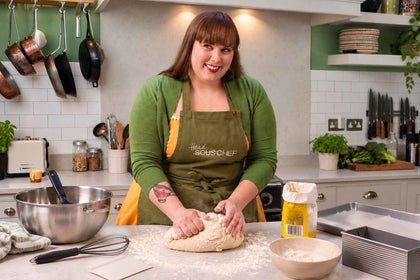
by Kristin Lohse


There are some baking tools I use so often that I’d notice immediately if they disappeared from my kitchen.
Some are very simple - a silicone spatula, a mixing bowl, a dough scraper. Others are pieces I bought because I bake a lot of bread and wanted something really good. But they all have one thing in common: I’ve used them enough to know they work.
These are the baking tools I have in my own kitchen, including several where apparently owning just one isn’t enough.
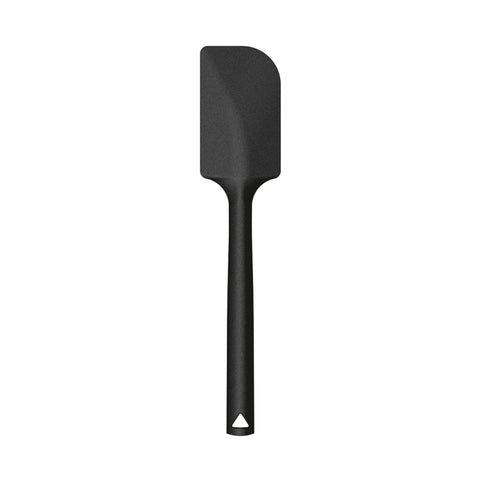

The spatula I have three or four of
I probably have three or four of these in my kitchen. They’re on constant rotation.
The spatula is silicone with a reinforced metal core, so it feels sturdy in your hand but you still get those flexible edges that get right into the curve of a mixing bowl. I use it for cake batter and baking, obviously, but also sauces and scraping the last bit out of containers. It’s one of those tools that ends up being useful for far more than you originally bought it for.
My preferred size is the 25cm. There is a larger version if you’re making big batches, but 25cm is the one I reach for day to day.
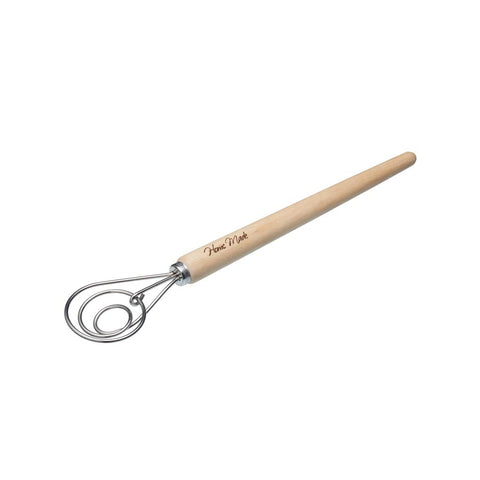
I didn't expect a dough whisk to make this much difference
A dough whisk – sometimes called a Danish dough whisk – looks slightly strange if you’ve never used one. I remember thinking: well, it’s a whisk. How different can it be?
Surprisingly different.
If I’m cold-proofing a dough, making a smaller batch or just want to mix something quickly in a bowl, this is what I use. The shape gets through flour and dough very quickly, without the mixture clumping around the whisk in the way it would with a normal balloon whisk.
And sometimes I simply don’t want to get the Ankarsrum out. I can mix the dough in one bowl, leave it there on the counter and have fewer things to wash afterwards. A very good argument for any kitchen tool.

A balloon whisk that doesn't take over the drawer
Every kitchen needs a good balloon whisk. The annoying thing about balloon whisks is storing them.
This Dreamfarm whisk twists from a full balloon whisk into a flat whisk, and then folds flat for storage. So instead of getting wedged diagonally across a drawer, it actually fits. You can also change its shape depending on what you’re whisking.
Most importantly, it feels solid. I’ve used cheaper balloon whisks where the wires start moving and bending when you whisk something with a bit of resistance. This doesn’t. It’s sturdy in your hand and a genuinely good whisk – the folding part just makes it much easier to live with.
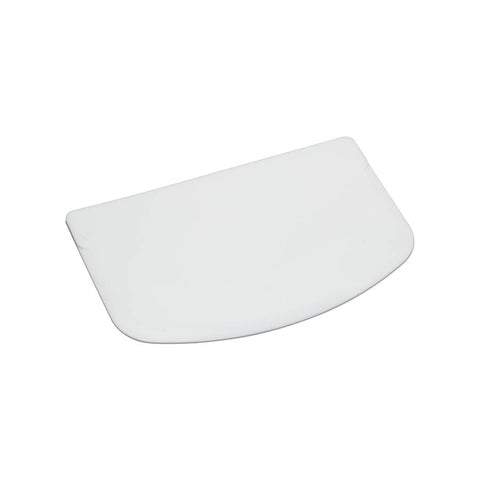
The £5-ish tool I panic about when I can't find it
I have multiples of these as well.
It’s a very simple dough scraper, but I use it for cutting and dividing dough, mixing dough, scraping bowls and cleaning down the worktop. The curved and straight edges make it useful for both bowls and flat surfaces.
It also comes out when I’m not baking. After chopping vegetables, I’d much rather scoop everything up with this than scrape the edge of my knife across the board. It gives you a much bigger surface to pick things up with, too.
My other half occasionally empties the dishwasher and puts the dough scrapers in a different drawer.
This is followed by me having a slight freak-out: “Have you seen my dough scraper?”
He tells me where he put it. I find it. All is well again.
That probably tells you how useful I find them.
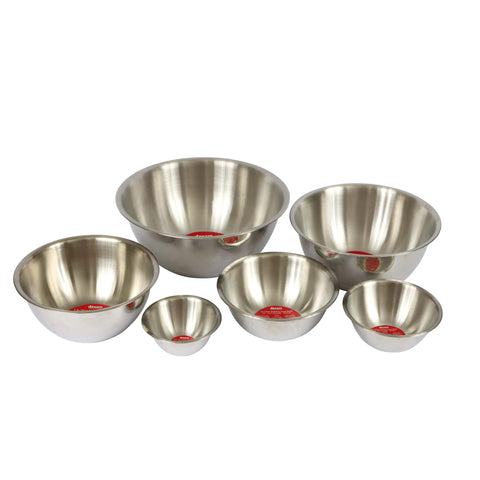
I don't think you can have too many mixing bowls
I use stainless steel mixing bowls for pretty much everything.
For baking, the 3.5 litre is probably the size I use most. The 2 litre gets plenty of use too, and I like having a 1 litre bowl alongside them when a recipe asks you to whisk one thing separately before adding it to the main mixture.
If I’m making a big batch of bread dough, I’ll sometimes reach for the 5 litre so the dough has plenty of room to rise.
They’re light, hard-wearing and easy to move around the kitchen, and because they come in so many sizes you can build up the collection you actually need rather than trying to make one enormous bowl work for everything.
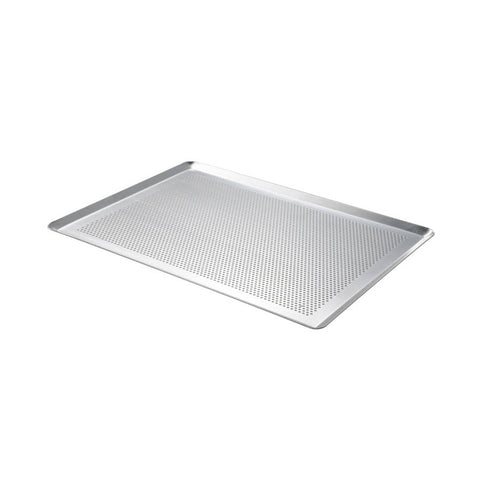
I have four of these baking trays
Yes, four.
The thing I particularly like about the De Buyer trays is the micro-perforated base. Those tiny holes help heat circulate underneath whatever you’re baking and allow moisture to escape, which means less chance of a soggy bottom.
They’re particularly good for macarons because you get that heat coming through underneath and a more even bake. But mine aren't reserved for anything special. They’re lightweight, easy to handle and get used for all sorts of baking.
Which explains why four of them live in my cupboard.
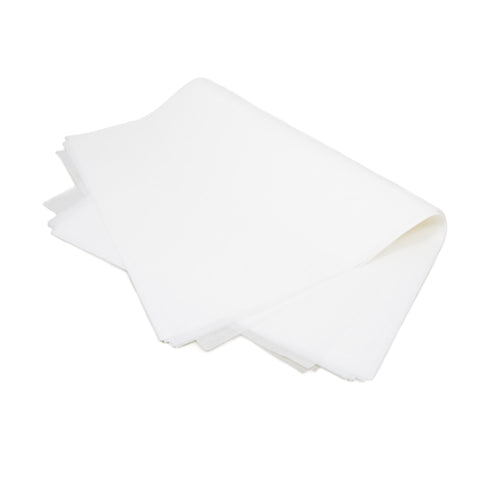
Pre-cut parchment paper brings me a ridiculous amount of joy
For years, I bought baking parchment on a roll.
You pull it out. Cut it vaguely to size. It curls itself back up. The edges aren't quite straight. You try to persuade it to stay on the baking tray.
Then I discovered pre-cut parchment.
These sheets are 40 x 60cm, so I usually take a batch and cut them in half to fit my normal baking trays. Then there’s a pile in the cupboard, ready to go.
The joy it brings me to pull out one perfectly flat sheet and put it straight onto a baking tray is probably slightly ridiculous.
My mum hadn't discovered them until she visited me recently. She saw mine and immediately asked me to order some for her. Then she called later and asked for a few more packets because she wanted to give them to her friends.
A few weeks later, I visited her and she was still talking about them.
So apparently an enthusiasm for pre-cut parchment paper runs in the family.
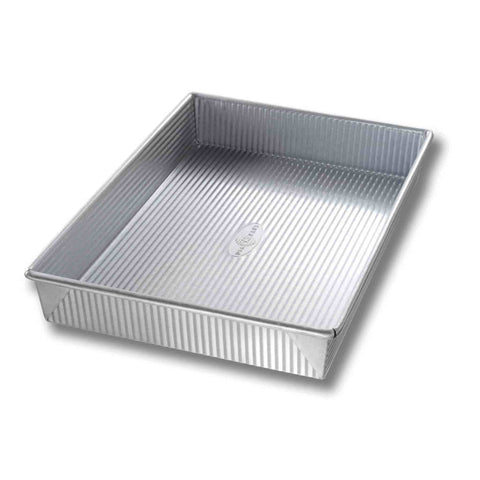
My everyday traybake tin
I use this pan for so many things.
It’s 23 x 33cm – roughly the classic American 9 x 13 inch size – which means lots of traybake recipes fit it very naturally. The ridged aluminised steel pan also gives you good airflow and even heat distribution as things bake.
I use mine for traybakes, roasting and tear-and-share breads. And cinnamon rolls when I’m feeling slightly lazy.
Rather than making a huge batch and shaping everything individually, I’ll sometimes make half a batch, tuck the rolls into this tin and bake them together.
There are only two of us at home, so it happens to be a really useful size for everyday cooking too. It’s a baking tin, but mine certainly doesn't spend its life waiting around for cake.
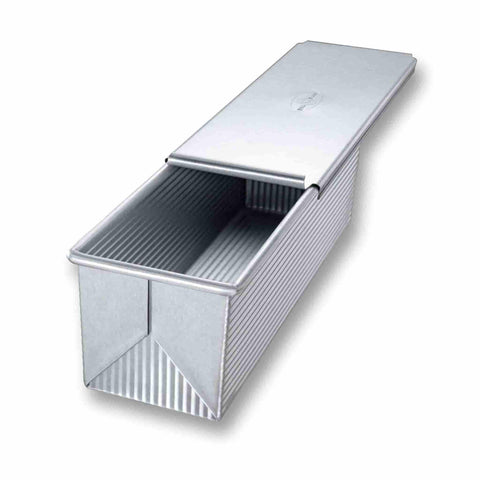
The loaf tin that makes homemade bread look suspiciously perfect
I bake a lot of bread.
Personally, I tend towards rustic loaves: wholemeal flour, seeds, nuts, dried fruit. My other half is more interested in classic white loaves and bread that makes really good toast.
For that, the Pullman tin is fantastic.
Put the lid on and the dough bakes into that wonderfully neat, square shape. The first couple of times I used mine, I couldn't quite believe I'd made the loaf myself. It looked far too even.
You don't have to use the lid, either. Without it, it works as a normal loaf tin, and I've used it for things like banana bread and lemon drizzle cake as well.
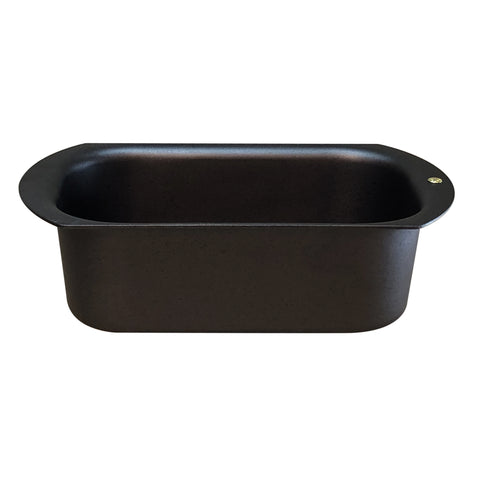
The loaf tin I've been baking with for years
If I’m making sourdough or a more rustic loaf, this is probably the tin I reach for most.
I’ve had mine for years and years. The spun iron gives bread lovely browning, and I really like the shape of the finished loaf. It's made in Shropshire and comes pre-seasoned with flax oil, so it develops further with use rather than being a tin you expect to replace after a few years.
It was one of the first more expensive pieces of kitchen equipment I bought for myself when I was younger. At the time it felt like a bit of a splurge.
I've now baked with it for years, and I can see myself using the same tin for decades more.
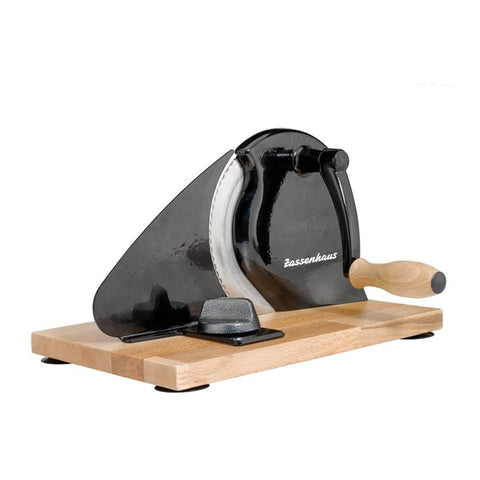
Because somehow my hand-cut slices always end up as wedges
I like even slices of bread. Possibly more than is reasonable.
If I cut a whole loaf by hand, I'll start off thinking, this is going very well. Nice thin slices. Very even.
Then gradually they get thicker and thicker until there's a wedge left at the other end.
The Zassenhaus bread slicer solves that. You can set the slicing thickness from 1–18mm, turn the handle and get properly consistent slices, including the thin slices that can be difficult to cut by hand without squashing the loaf or covering the board in crumbs.
There’s another reason I use it so much. I go through phases where I eat lots of bread, and others where I eat much less. If I've baked a couple of loaves, I let them cool completely, slice them and put some of the slices straight into the freezer.
Then I can take out exactly what I need. A frozen slice can go straight into the toaster, or I can leave a couple to defrost if I don't want toast.
And because I tend to bake in loaf tins, I know that a particular loaf, cut at a particular thickness, will give me roughly the same number of slices every time.
Fussy? Perhaps.
But my freezer is extremely well organised.


About the author
Kristin is the Purchasing and Buying assistant at Sous Chef. She has several chefs and excellent home cooks in her family, and grew up in the kitchen in Sweden. Cooking and baking with her mum happened pretty much every day. Cinnamon rolls were always stocked up in the freezer, and if they were running low, more baking had to be done. Kristin always loves learning more about food and ingredients to continue improving her skills.