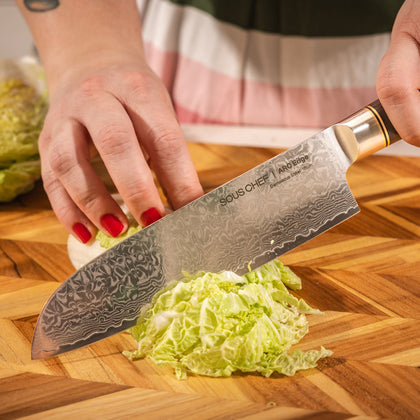
Anna Ansari, on Flavours from Baku to Beijing
by Anna Ansari


Anna Ansari's new book, Silk Roads, is a culinary journey across borders, offering dishes that are rooted in history and alive with personal storytelling.
From the delicate tang of Azeri Khingal noodles with saffron lamb, to the warmth of an Iranian quince khoresh, her recipes shine a light on the way food connects us to home, to memory, and to one another.
In this interview, Anna shares what inspires her, the meals that have shaped her life, and the pantry staples she can’t live without.
What’s the best thing you’ve eaten recently?
Oh this is an easy one! We just went to St. John to celebrate my husband’s 40th birthday and (finally!) had the roast suckling pig. It was extraordinary in its perfection and simplicity (and we will be eating leftovers – because, yes, I did take a massive doggie bag of pork home from St. John – for days). I also deeply loved their crispy pig’s cheek with chicory and sorrel.
MAKE: Anna Ansari's Quince Khoresh Iranian Quince & Chicken Braise Recipe

What’s the one dish to make anyone fall in love with your new book?
While I love all my babies equally, my Scottish husband’s answer to this is clear– Khingal (Azeri Noodles with Crispy Minced Lamb). They’re basically broad, flat noodles that look like a cross between lasagne sheets and ribbons of pappardelle, yet are distinctly their own (often diamond-shaped) thing.
On top of the noodles, you’ll find golden dollops of caramelized onions, spoonfuls of saffron-tinted crispy minced lamb, and a drizzle of tangy, garlicky yogurt. Like so many of the recipes in Silk Roads, it is not only more than the sum of its (rather simple) parts/ingredients, but also showstopping in its visual presentation as well as truly striking flavor-wise.
Which Sous Chef ingredients are always stocked in your pantry?
- Kikkoman Soy Sauce (side note: does anyone remember that incredible cartoon advert for it from 20 years ago? With the fighting Kikko “man” and a catchy tune?)
- Lao Gan Man crispy chili in oil – always and forever.
- Red Boat Fish Sauce – the only way to go.
- And I always have at least a couple tins of San Marzano tomatoes on hand.
Which single store cupboard ingredient could you not live without?
Rice. Period. End of story.
What dish do you make most often?
This is a toss up between Iranian-style basmati rice and bread gazmakh with a quick chicken and pepper stir fry, Joshua McFadden’s Kale Pasta Sauce, or steamed short grain rice and the Di Si Xian (Four Earthly Treasures) from Silk Roads (see recipe below). Those three are in heavy rotation at my house.
TRY: Anna Ansari's Di Si Xian Four Earthly Treasures Recipe,

What do you cook, when you’re cooking for yourself?
Either Iranian-style basmati rice and bread gazmakh, or steamed short-grain rice. With eggs – Pomidor Yumurta (Azeri Eggs & Tomatoes) from Silk Roads, or a simple fried egg with soy sauce and crispy chili in oil, or Chinese-style stir-fried eggs and tomato. Some combination thereof.
Or I’ll throw together a really big salad, typically with romaine lettuce, feta cheese, herbs, walnuts, tomatoes and an easy vinaigrette. I’m a pretty simple solo eater.
Where do you find inspiration?
I was going to say travel, and, while I definitely find inspiration from travel, I also don’t need to travel to be inspired. I am so fortunate to live in one of the most vibrant and diverse cities in the world, and it is the diversity and multiplicity of cultures, cuisines, perspectives and people that one can so easily (and luckily) find in London that I find inspiring. Practically every time I enter a food shop on my high street, I discover a new ingredient.
Recently, I picked up some cassava and taro for the first time– just because I could, just because I wanted to learn how to cook them. So, while travel is great and inspiring, you don’t have to physically leave the borders of your country, or your neighborhood even, in order to discover and be inspired. You don’t even need to leave your kitchen.
How do you stay current with food trends and incorporate them into your food?
I don’t.
RECIPE: Anna Ansari's Shah Plov Azeri King Crown Rice Recipe

Can you tell me about a particularly memorable meal you have had and what made it so special?
Balthazar in NYC has long been a restaurant where I have marked special occasion after special occasion. My sister and I used to go for early morning, pre-work birthday breakfasts there. I ate my first oyster there. I celebrated my law school graduation there. And it was over a bottle of Sancerre and creme brulee at Balthazar on a chilly winter’s night that my husband and I made our relationship official/exclusive. And, last year, we celebrated our 10 year wedding anniversary at Balthazar’s London outpost with our then 5 year old in tow.
We could have gotten a babysitter, but opted not to– we wanted to celebrate our family all together, over oysters and burgers and a lot of laughs, and so we did. And Theo was definitely the youngest diner in the room. And I couldn’t have imagined a more beautiful, memorable meal.
What will you be cooking next?
In addition to making a freezer’s worth of ragu bianco with my leftover St. John suckling pig? My Dimlama (Uzbek Harvest Stew) and Quince Khoresh (Iranian Quince and Chicken Braise) from Silk Roads are both on deck. ‘Tis the season for fantastic British autumnal produce…. and warming, comforting food, and both the Dilama and Quince Khoresh tick those boxes.
Oh! And dumplings! I have to make a lot of dumplings next week for an alumni event! I almost forgot. I will be making dumplings galore.
Which cookbooks have shaped the way you cook, or think about food?
My cooking hasn’t been shaped by cookbooks as much as by cooks themselves, specifically homecooks. I’m talking about my mother, my sisters, my great-aunt, my family friends growing up, my best friend and her mother, the myriad (mostly women) homecooks I have been lucky to know and learn from throughout my life and travels.
That being said, if I had to pick, I’d say the most influential cookbooks for me have been Najmieh Batmangli’s The Food of Life and Martha Stewart’s Entertaining.
I don’t remember ever being without them.
How do you balance tradition and innovation in your cooking?
I like to look at what is around me and go from there– whether that’s cooking according to the seasons or according to my environment. For instance, because I live in the UK, I cook with a lot more venison than I ever did in the US. British venison is great! It’s delicious, relatively environmentally friendly and heart-healthier than other red meat; so I use venison in lieu of beef or lamb in a lot of “traditional” Iranian dishes.
Just because ghormeh sabzi isn’t “traditionally” made with venison doesn’t mean it shouldn’t be. Is that innovation though? Or just adaptation? Is there a difference? And does it matter if there is? People move and we adapt as we move, and so too does our food– based upon our situations, environments and means.
I make a lot of broccoli kuku (you can find my recipe for Cruciferous Kuku in Silk Roads) because my son likes to eat broccoli; it might not be “traditional,” but it’s delicious and it works for my family.
See all of Anna's dishes here, and browse more ideas in our bank of recipes at Sous Chef.
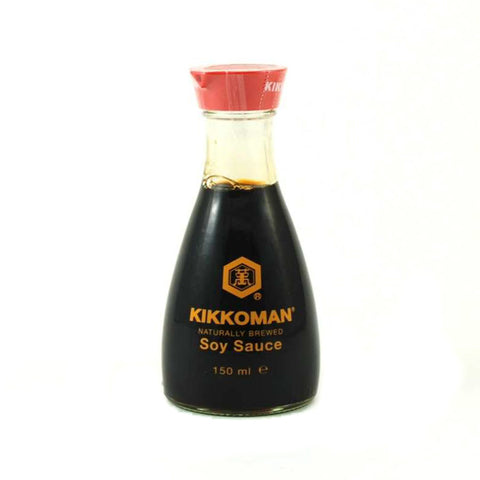
Kikkoman Soy Sauce - Pouring Pot, 150ml
Kikkoman Soy Sauce - Pouring Pot, 150ml
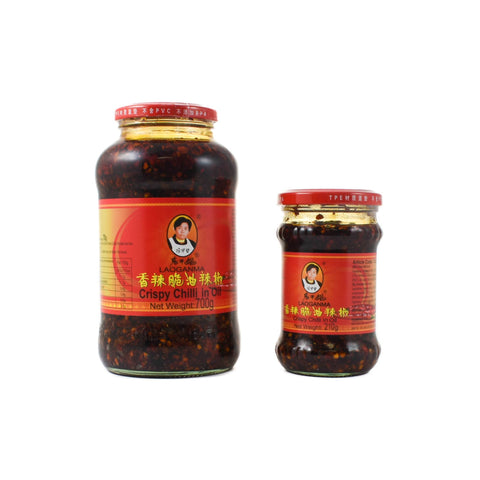
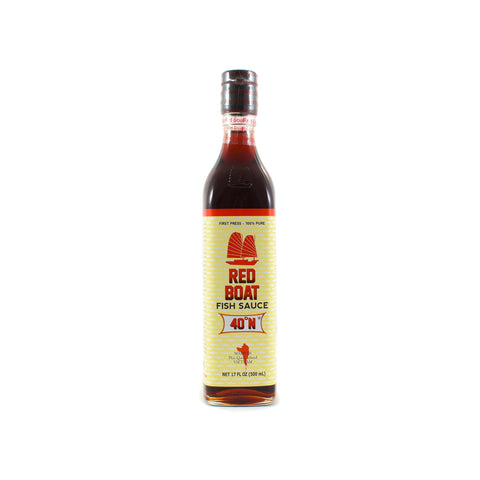

Red Boat Fish Sauce
Red Boat Fish Sauce
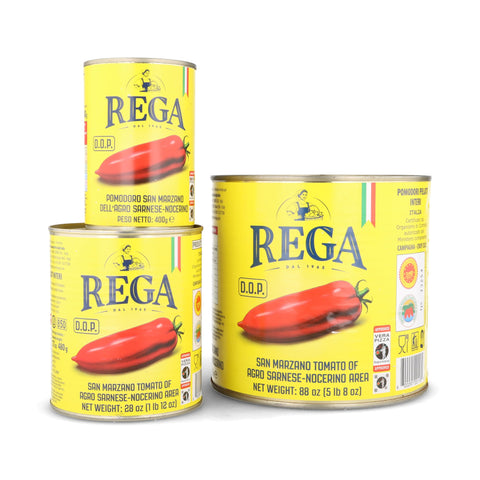
Rega DOP San Marzano Tomatoes
Rega DOP San Marzano Tomatoes


About the author
Anna Ansari has a background in Asian studies, with a BA from Barnard College, Columbia University and an MA from Yale University. Her writing focuses on the intersection of food, family, and history, with special attention to the immigrant experience and foods of the Asian continent.