The Ultimate Guide To Woks


A wok isn’t just another pan — it’s the heart of countless kitchens across Asia, prized for its speed, versatility, and the unmistakable flavour it brings to food. From stir-fries that sear in seconds to slow-braised dishes that deepen over hours, the wok is one of the most useful tools you can own.
At Sous Chef, every wok in our collection has been handpicked and tested by our team. Whether you’re new to wok cooking or ready to invest in a lifetime pan, this guide will help you choose the right shape, size, and material for your kitchen.
What is a wok?
The wok is probably the most versatile piece of equipment in Chinese cooking. It can have a round or flat bottom.
They conduct heat in a slightly different way due to the shape, but it does not make much difference for day to day cooking - a round bottom is better for high heat stir frying, a flat bottom is better for searing and shallow frying.
The high, curved sides of a wok allow food to be tossed around so that all ingredients can be cooked evenly at a high heat. You can also sit a bamboo steamer on top for making bao or dumplings.
Why Cook with a Wok?
The wok’s curved sides and wide surface are designed for high heat. Food sears quickly, sauces reduce in moments, and vegetables keep their crunch.
But woks aren’t just for stir-frying — you can steam dumplings, deep-fry tempura, braise meats, or even smoke fish in them. It’s a single pan that opens up a world of cooking.
Types of Woks
Round-bottomed woks
- Traditional style, perfect for gas hobs and wok burners.
- Ideal for tossing and stirring at high heat.
- Needs a wok ring if used on flat stovetops.
Flat-bottomed woks
- Designed for modern hobs (induction, electric, ceramic).
- More stable on flat surfaces.
- Slightly less traditional movement of food, but practical for everyday kitchens.
Handles
- Single long handle (stick wok): Best for quick stir-fries, easy to toss.
- Two loop handles (Cantonese wok): Heavier dishes, steaming or braising.
Wok Materials: Which to Choose?
Carbon steel
- The classic choice in professional and home kitchens.
- Lightweight, heats quickly, and develops a natural non-stick patina with seasoning.
- Needs care: dry after washing to avoid rust.
Cast iron
- Holds heat beautifully, giving a powerful sear.
- Heavier, but a joy for slow braises and deep-frying.
- Requires seasoning and regular care.
Non-stick coated
- Easy to use and clean, ideal for beginners.
- Best for gentle stir-fries, but avoid very high heat.
Stainless steel
- Durable and easy to maintain.
- Doesn’t season like carbon steel or cast iron.
- A good all-rounder if you prefer low-maintenance cookware.
Choosing the Right Size Wok
- 26–30cm (10–12 inch) – great for one or two people, or small kitchens.
- 33–36cm (14 inch) – the most versatile size, perfect for families.
- 40cm+ (16 inch and above) – best for entertaining or batch cooking.
- Tip: A deeper wok is better for braising and steaming, while a shallower wok gives more surface area for stir-frying.
How to Season and Care for Your Wok
Seasoning creates a natural non-stick surface and protects your wok.
- Wash off any factory oil coating.
- Heat the wok until very hot.
- Rub with a thin layer of oil and burnish into the surface.
- Repeat several times until the metal darkens.
After cooking: wash quickly, dry well, and rub with a drop of oil to keep rust at bay. Over time, your wok develops a deep, glossy finish — a sign of good cooking.
Must-Have Wok Accessories
- Wok ring – stabilises a round-bottom wok on flat hobs.
- Wok spatula or ladle – curved edges make stirring easier.
- Bamboo steamer insert – sits snugly in the wok for dumplings or buns.
These tools aren’t just extras — they make cooking in a wok easier, more authentic, and more enjoyable.
Our Top Picks
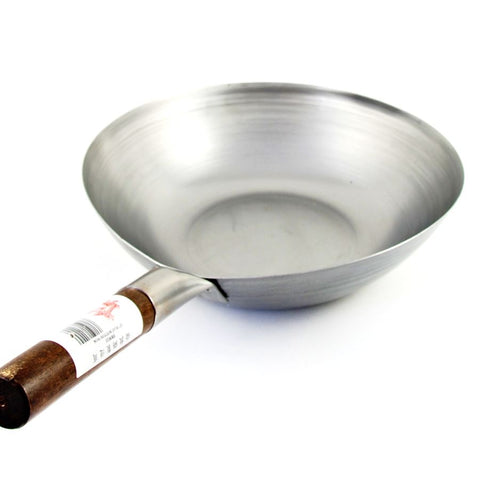

Carbon Steel Wok - Flat Base, 33cm dia
Carbon Steel Wok - Flat Base, 33cm dia
This carbon steel wok, or flat-bottomed wok, is a versatile cooking pan, most often used for stir frying – but also for home-smoking, deep frying and steaming. Carbon steel is the best metal thanks to its ability to heat quickly and evenly. The carbon steel wok’s flat bottom means that that it is suitable for both electric, induction and gas cookers.
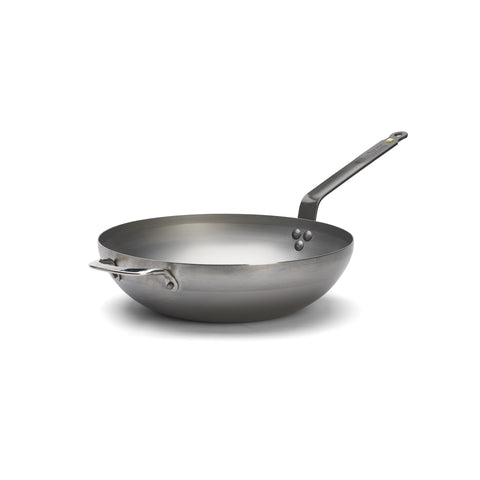
De Buyer Mineral B Flat Base Wok, 32cm
De Buyer Mineral B Flat Base Wok, 32cm
Stir fry like a pro with the De Buyer Mineral B wok. Made from 99% pure steel, it has a flat base and riveted handle. You can use it on all kinds of hobs, including induction.
Steel pans are ideal for high heat cookery. The Mineral B carbon steel surface becomes more non-stick with every use. Over time, you can cook with very little oil. It is a thicker material than many of the Chinese carbon steel woks so can stay hotter if you don't have a gas flame wok burner to cook on.
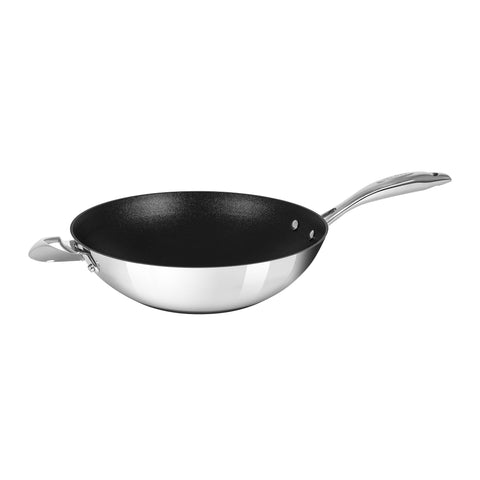
Scanpan HaptIQ Stainless Steel Non-Stick Wok, 32cm
Scanpan HaptIQ Stainless Steel Non-Stick Wok, 32cm
Stir fry like a pro with SCANPAN’s HaptIQ non-stick wok. With high sides and a large frying surface, it’s ideal for high heat cookery. Made from five layers of steel, this wok is durable and versatile. It’s suitable for all stovetops, including induction, and can also be used in the oven. The helper handle makes it easy to lift and carry the pan.
Which Wok is Right for You?
Read on for a full introduction for how to choose the wok for you. But for the tldr version...
- Best for beginners: Carbon Steel Wok - Flat Base, 33cm dia
- Best for induction hobs: De Buyer Alchimy Wok, 32cm
- Best for the design-led cook: Skeppshult Noir Cast Iron Wok, 34cm
- Best all-rounder: De Buyer Mineral B Flat Base Wok, 32cm
How is a wok used in Chinese cooking?
From Hong Kong cook Cherry Tang:
"The most common use of a wok is stir frying. ‘Wok hei’ is a term to describe the flavours of a dish that is cooked in a wok at a high heat. ‘Hei’ means energy or ‘chi’, which also represents the smoky or charred flavours created during the process.
"You will see this technique being used by both a street side noodle stall and a high end Michelin star restaurant. For a dish containing both vegetables and meat, the vegetables should be slightly charred on the outside but still remain crunchy and fresh, while the meat should be just cooked but still tender inside."
Recipes to Try in Your New Wok
- Classic Chinese fried rice
- Sweet and sour pork
- Sichuan dry-fried green beans
- Cantonese steamed fish
Shop Chinese ingredients, and find the best woks at Sous Chef.