How to Store Olive Oil
by Holly Thomson


Our guide explains everything you need to know about how to store your olive oil to ensure it remains in tip-top condition.
Storing Olive Oil
How do I store olive oil?
You need to keep your olive oil away from three main things: light, heat and oxygen. Read on to find out how each thing affects the olive oil's properties.
- Light - If olive oil has been affected by sunlight its appearance will change from glowing to dull, and often turn from green to yellow. It can also turn the oil rancid much quicker.
- Oxygen - UVA and UVB rays in sunlight cause a process known as 'photo-oxidation'. These high-energy light rays cause the oxygen in the oil to get 'excited'. This now-energetic oxygen starts to 'attack' (or oxidise) the fat molecules in olive oil. The end result is that all those lovely flavours and aromas get broken down, and you're left with a bland or rancid olive oil.
- Heat - High storage temperatures can negatively affect the nuanced flavours of the olive oil and over time these compounds can become unpleasant and rancid.
The best way to store olive oil is in a dark and cool place. Most kitchen cupboards or pantries are suitable. The close to the floor the better, as this is where it's cooler. The absolute best temperature to olive oil at is 15°C.
Why should olive oil be kept in a dark bottle?
As mentioned above, UVA and UVB rays in sunlight cause the olive oil to break down and turn rancid. Dark coloured glass – especially greenish-brown glass – absorbs most of the destructive UV rays, meaning you’re less likely to end up with a bad olive oil.
Should I buy olive oil in a bottle or in a can?
Dark glass bottles absorb most of the UV rays which cause olive oil to go rancid, while opaque tins don’t let any UV rays in at all. Both options are good, so when it comes to choosing an olive oil in a bottle or in a can, you should decide based on the olive oil you prefer taste-wise.
How long does a bottle of olive oil last?
Olive oil is usually good to use for 24 months after harvest (if it’s kept in a cool dark place), and some bottles will have the harvest date printed so you can tell exactly how old it is. They might even display a best before date.
How do I know how fresh my olive oil is?
Even when stored correctly, olive oil will slowly lose its flavour over time. As with most things food-related, fresh is best!
- The main way to tell if an oil is past its best, or has started to go rancid, is by its flavour and aroma. If you've tried different olive oils and thought they all tasted the same, chances are you've not tried a fresh one.
- The older an olive oil gets, the 'flatter' its flavour becomes. A fresh oil might be peppery, fruity, grassy or nutty – but it should never be bland.
- If an oil has started to go rancid it will smell unpleasantly sweet, and might leave a very unpleasant sour taste in your mouth. It will make you think of fermenting fruit. It won’t smell appetising!
Sometimes you can tell how fresh an oil is by its colour. An old oil may have a dull, yellow appearance. Although this isn't true for all olive varieties. For instance, perfectly ripe Taggiasca olives produce a deeply golden yellow oil even when they are fresh.
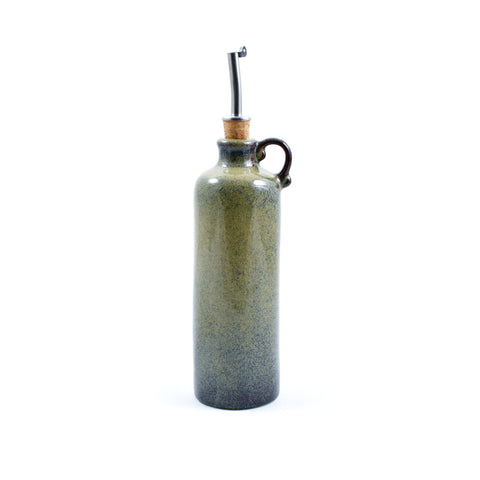
Lagoa Oil & Vinegar Pouring Bottle
Lagoa Oil & Vinegar Pouring Bottle
However, if you already have an olive oil you would like to preserve our favourite way of storing is with our Lagoa oil and vinegar pouring bottle. Since it's a ceramic bottle, it is completely opaque which keeps out those pesky UV rays, the thick walls also help keep the oil cool and the handy bottle stop helps to keep out oxygen.